

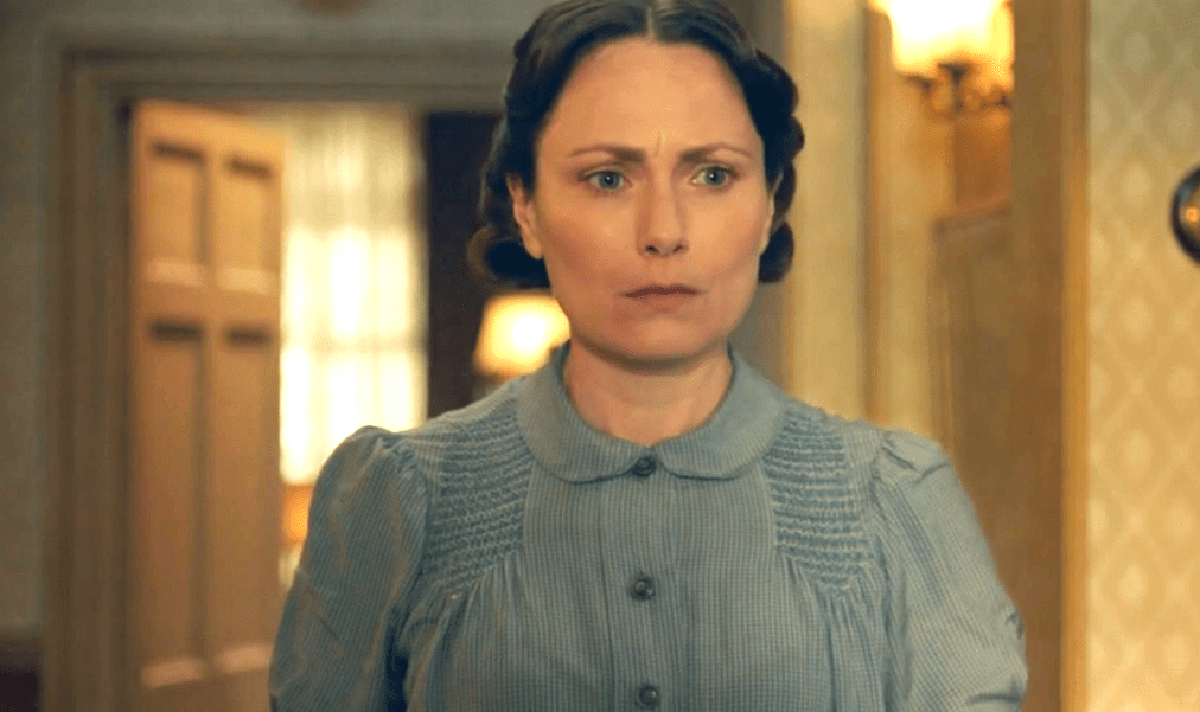

Most readers familiar with All Creatures Great and Small know Helen Alderson as the farmer’s daughter who quietly wins James Herriot’s heart. She’s warm, grounded, and deeply tied to the Yorkshire countryside. But the real woman behind that character lived a very different life — private, undocumented by public record, and largely unknown outside genealogy databases and Herriot fan circles.
Her name was Joan Catherine Anderson Danbury. She was James Herriot’s wife. And while her husband became one of Britain’s most beloved authors, Joan herself remained in the background — exactly where, it seems, she preferred to be.
This article looks at what is actually known about Joan: her confirmed biographical details, her marriage to James Alfred Wight (the man behind the pen name James Herriot), and how she compares to the fictional Helen Alderson. It also explains why so little information exists about her despite her close connection to such a famous literary figure.
Who Was Joan Catherine Anderson Danbury?
Joan Catherine Anderson Danbury was born on 28 March 1919 in Gloucestershire, England. She died on 14 July 1999 in Thirsk, North Yorkshire, at the age of 80.
After her marriage, she became Joan Catherine Anderson Wight. The “Anderson” in her name likely reflects a family surname carried as a middle name — a fairly common English naming tradition. Records from MyHeritage note that she had at least one sibling: a brother named Horace Anderson Danbury.
Beyond those basic facts, confirmed public information about Joan is thin. She was not a public figure in any traditional sense. Her name appears mainly in genealogical and memorial records — Find A Grave, Geni, MyHeritage, and FamilySearch — rather than in journalism, interviews, or biographical writing. She did not write books, give speeches, or seek any form of public attention.
That in itself tells you something about the kind of life she led. She was, by all available evidence, a private person who simply lived her life alongside an increasingly famous husband.
Her Marriage to James Alfred Wight
Joan married James Alfred Wight on 5 November 1941, in Outwood, Yorkshire, England. Wight had graduated from Glasgow Veterinary College in 1939 and was already working as a vet in North Yorkshire by the time they wed.
Their life together was built around Thirsk — the small North Yorkshire market town that Wight used as the real-world base for his fictional Darrowby. It was there that he ran his veterinary practice. It was there that their family grew. And it was there that Joan died, nearly six decades after she first arrived in Yorkshire as a new wife.
Together, Joan and James had two children. The details of their children’s lives are not broadly documented in mainstream public sources, and it would not be appropriate to speculate beyond what records confirm. What is clear is that they formed a close family unit, rooted in the rhythms of a working veterinary practice in a quiet English market town.
Joan outlived her husband by four years. James Alfred Wight died in February 1995. Joan passed away in July 1999. She had been his wife for roughly 54 years.
James Herriot — The Famous Husband Behind the Name
To understand Joan’s world, it helps to know who her husband was and what he became.
James Alfred Wight was born in Sunderland in 1916. He trained as a veterinary surgeon at Glasgow Veterinary College, graduating in 1939. He then settled in North Yorkshire, where he spent nearly his entire professional life working as a country vet — treating farm animals, horses, and pets across the Yorkshire Dales.
Writing under the pen name James Herriot, Wight published a series of books drawn from his experiences in the field. The most well-known, All Creatures Great and Small, became an international bestseller. The books were later adapted into a beloved BBC television series, and more recently into a new production for Channel 5 and PBS Masterpiece.
The books were semi-autobiographical. Wight drew directly from his life — his colleagues, his patients, his home, and his marriage — and shaped them into warm, often funny stories about rural veterinary life. The character of James Herriot is Wight himself. And the character of Helen Alderson is, at least in part, Joan.
Joan’s adult life overlapped entirely with the arc of her husband’s career — from the early years of a working vet to the later decades of a globally recognized author. She was there through all of it, even if the public never really saw her.
Joan Danbury and the Character of Helen Alderson
This is usually the reason people search for Joan in the first place. Viewers of All Creatures Great and Small want to know: is Helen Alderson a real person?
The short answer is yes — and no.
PBS has stated directly: “Joan Danbury is the real Helen Alderson.” That confirms the connection. But PBS also notes that Helen Alderson is the character “least like her true-life counterpart” in the series. In other words, while Joan inspired the character, Helen is not an accurate portrait of her.
The most obvious difference: Helen is portrayed as a farmer’s daughter. Joan was not from a farming background. Wight changed his wife’s origins for the story — a common choice among authors who fictionalize real relationships. The emotional core might be true. The specific details often aren’t.
This is not unusual in literary history. Many famous authors have drawn on their spouses and loved ones while reshaping those people for narrative purposes. The character becomes someone new — carrying traces of the original person, but built to serve the story. Helen Alderson is warm, capable, and deeply embedded in Yorkshire farm life. Joan Danbury, from what records show, was an English woman from Gloucestershire who happened to marry a Yorkshire vet. The two overlap, but they are not the same.
It’s worth sitting with that gap for a moment. The modern audience has watched Helen Alderson across multiple TV adaptations, forming strong impressions of who she is. Joan, meanwhile, left behind almost no public record. The fictional version is more visible than the real one — which says a great deal about the strange relationship between literary fame and private life.
Why So Little Is Known About Her
Joan Catherine Anderson Danbury was not a celebrity. She did not write books, give interviews, or appear in the media. Her husband’s fame did not translate into public attention for her — at least not during her lifetime.
Most of what exists about her comes from genealogical databases. These records confirm the basic shape of her life: born in Gloucestershire in 1919, married in Yorkshire in 1941, died in Thirsk in 1999. They note a brother, a husband, two children. They do not tell us what she thought about the books, what she did with her time, or how she felt about being immortalized — and altered — in fiction.
That silence is not unusual for women of her generation who were not themselves public figures. It simply reflects the reality that detailed personal records tend to follow fame, and Joan did not seek fame.
For readers and fans exploring Herriot’s world, publications like Green Business Mag and similar platforms increasingly look at the real people behind cultural icons — not to expose them, but to understand them more fully and honestly.
Joan deserves to be understood on those terms: as a real woman, not just as the inspiration for a TV character.
A Life Lived Quietly
Joan Catherine Anderson Danbury was born in Gloucestershire eight years after her husband, married him in wartime Yorkshire, raised a family in Thirsk, and outlived him by four years. She was not a farmer’s daughter. She was not a fictional character. She was a real person whose life happened to run alongside one of Britain’s most beloved literary careers.
That’s about all the confirmed record allows us to say. And perhaps that’s enough. Not every life needs to be fully documented to matter. Joan’s presence in James Wight’s world shaped the books more than most readers will ever fully know — even if the character she inspired looks quite different from the woman she actually was.
For anyone curious about Herriot’s work and the world behind it, Joan Catherine Anderson Danbury is a quiet but real piece of that story.
Read Also: